 UnTouchable
Jessie J found a lump, was told it looked fine, and asked again
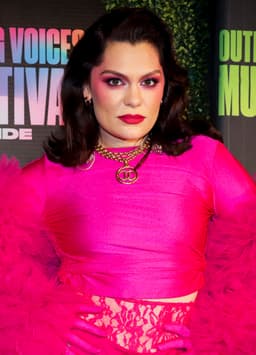

Jessie J shared this about their own health, publicly. Everything below is written in our own words, from the sources listed at the end.
Jessie J was 37, and days from returning to music after four years away, when she was diagnosed with breast cancer last March.
The part of her account worth reading twice is how it was found. She felt a lump and thought it did not feel right, so she went to be looked at. The ultrasound came back clear — everything looks fine, she was told. She did not leave it there. She mentioned an achy arm, and waking up with pins and needles, and asked whether any of that meant anything. On the strength of those symptoms they did a biopsy.
She said the first person she phoned was her mother, and what she said was that she could not die, because she has her son.
She had a mastectomy on her right breast in June, and documented it for her followers, because she is, in her words, a sharer, and she thinks these things need talking about. She has said she was very lucky to find it so early and that it was not invasive, and that she knows there is a chance it could come back — but until then they are living life.
Her own advice, at the end, was to trust your instinct: you know your mind and you know your body.
Nothing here is medical advice. If you find a lump or notice a change, the NHS advice is to see your GP.
In their own words
One of the sources for this story is an interview with Jessie J. You can watch it here.
This plays from YouTube. Nothing loads from Google until you press play. Open the source on YouTube instead.
Join UnTouchable to save stories and come back to them. You do not need an account to read anything here.
Key moments
Finding it
Last March
She felt a lump, thought it did not feel right, and went to be looked at.
Told it looked fine
After an ultrasound
The scan was clear. She raised an achy arm and pins and needles, and asked whether it meant anything. They did a biopsy.
The first phone call
After the diagnosis
She phoned her mother and said she could not die, because she has her son.
Surgery, in public
June
A mastectomy on her right breast, documented for her followers because she believes these things need talking about.
What this story is about
Where this came from
Every story here is built only from what the person said publicly themselves. These are the sources we used.
Jessie J opens up about breast cancer diagnosis
Good Morning America, ABC · Interview
Jessie J is not affiliated with and has not endorsed UnTouchable.
Published 20 September 2026. Something wrong here? Ask us to correct or remove this story.
If you want to talk to someone about cancer
You do not have to be newly diagnosed, or in treatment, or the person who is ill. These are free, and they are for whatever you have on your mind, including the parts that are not medical — money, work, or how to tell people.
Macmillan Support Line — 0808 808 00 00
Free, 8am to 8pm every day, for anyone affected by cancer. Nurses, and advisers on money and work as well.
Maggie's centres — Find your nearest centre (opens in a new tab)
Free drop-in support in the grounds of NHS cancer hospitals. No referral, no appointment, and family and friends can go too.
You are not the only one
Other stories about the same conditions.
Jo Malone
Jo Malone lost her sense of smell during treatment, and told nobody
Content note — this story covers a subject some people would rather choose when to read.
Jo Malone was thirty-eight and working on a shoot when she noticed a tiredness that was not normal. She went back to the hotel, had a shower, and found a lump. It did not hurt, and it moved. She had it looked at when she got home. Her doctor wanted it scanned. She said she was going to a party that evening; he told her the scan was happening now. At the scan she remembers the nurse's face, and the nurse excusing herself and saying she would be back in a second, and knowing then. Seven days of further scans followed, which she describes as horrendous — every machine asking the same question, which was whether it had spread. At the end of that week she was told she had a very aggressive breast cancer, and that she needed a lumpectomy straight away. She flew to New York the next morning, on the advice of Evelyn Lauder — who she describes as the woman behind the pink ribbon breast cancer campaign, and who told her that sometimes the sweetest thing in your life comes wrapped in bitterness. She had the lumpectomy the following day. Seven days after that she was called with the results: ductal carcinoma in situ, and she was told that even with the lump taken out it would come back, so she would need a mastectomy. Her husband fell on the floor. Her own first response was to tell them to run the test again, because they had it wrong. She was operated on a week later, and afterwards went into what she describes as severe depression and anxiety. She did not want to talk. She did not want to see her son. She looked at her body and thought she would never be attractive again, never be a woman again. Chemotherapy began almost immediately and went on for about a year and a half. She lost her hair in the first round and says that was the point she felt stripped of everything she was. Every seventh day her white cell count fell and she was back in intensive care. She got shingles, and, in her words, everything else going. Her husband did not leave her side. Near the end of it she found something in the other breast and had to go through all of it again. Her reaction the second time was not the same as the first. Take it off, she said. She was not going to spend her life wondering. What she told nobody, through all of it, was that the treatment was taking her sense of smell. She could feel it going. She was ashamed — she was Jo Malone, she had built a global fragrance company, and she could not say it out loud. She says cancer does that to people: it shames you, and tries to make you feel you are not worth it. She has been clear for twenty-one years. She says she has never let cancer be the book. It is a chapter, boxed, and she is not frightened of it any more. A few months before this interview she learned something she had not known at the time. The doctor who treated her in New York came to dinner and told her that on the standard chemotherapy of the day she would not have survived, and that he had put her on a protocol that was new then — one that gave chemotherapy far more often than was usual — along with a small number of other women. She says all of them are alive, and that the protocol is ordinary treatment today. She had not known any of that while it was happening, and says there would have been no point telling her, because what it would have taken away was hope. Nothing here is medical advice. That last part is her account of what her doctor told her many years afterwards, and it is not something this site can check; no treatment described here is being put forward as one that works, and decisions about treatment belong with an oncologist. The NHS says to see a GP about a lump or swelling in the breast, chest or armpit, or any change in your breasts or nipples that is not normal for you. It also says these symptoms are very common and often caused by something else, and that finding cancer early may mean it is easier to treat.