 UnTouchable
Brooke Shields on postnatal depression, and being told it was just the baby blues
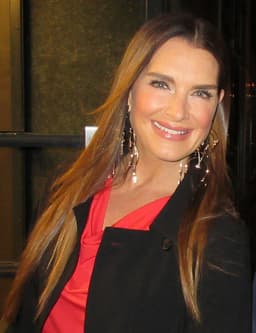

Brooke Shields shared this about their own health, publicly. Everything below is written in our own words, from the sources listed at the end.
Before you read this
This story talks about postnatal depression, and about a mother who wanted to die. You do not have to read it now. Support is listed at the end of the page, and it is there any time.
In May 2007 Brooke Shields spoke at a press conference in Washington DC in support of a proposed American law on postnatal depression, which would have put federal money into education, detection and treatment. She used it to describe what had happened to her after the birth of her daughter.
The worst of it, she said, was that she did not know what she had. She could not hold her baby, or look at her, or kiss her, or sing to her. If she stayed close to her she went weak at the knees and felt she might faint. She cried constantly. And still it did not occur to her that this was postnatal depression, because that was not something that was going to happen to her.
What she had instead was a conclusion. She had made a terrible mistake, she was an incapable mother, and her daughter and her husband and everyone around her would be better off without her. She was clear about how it felt from the inside: not dramatic, not hysterical — clear and rational, the obvious thing to do. She had begun to think about ending her life.
She described an early appointment where a doctor asked how she was doing and she told him the truth: that she could not do this, that she had changed her mind, that the baby could not stay with her, and would he please help her not do this. She said she was told it would be fine, that his wife had been through the same thing, that it was the baby blues and hormones, and that it would pass soon. She was told not to worry.
She went on to write a book about it and to campaign for the condition to be taken seriously. Six years later, in an interview with Marlo Thomas, she came back to the same ground. The most frightening part, she said, was looking at her daughter and feeling nothing at all — feeling she could walk out of the room and never come back and the baby would be better off. She said depression is persuasive because it is tailored to the person it happens to: you ask yourself the questions and you get back answers that sound true. And she said the reason it stays unspoken is shame. We are told that having a child and loving it is the most natural thing in the world, so a mother who does not feel that assumes she has failed rather than that she is ill.
What she wanted from saying it out loud, in both, was that a woman going through it should not believe she is the only one it has ever happened to.
Nothing here is medical advice. The NHS says postnatal depression is common and usually gets better with treatment, and that you should speak to a GP, midwife or health visitor if you think you may have it — even if only some of the signs fit.
In their own words
One of the sources for this story is an interview with Brooke Shields. You can watch it here.
This plays from YouTube. Nothing loads from Google until you press play. Open the source on YouTube instead.
Join UnTouchable to save stories and come back to them. You do not need an account to read anything here.
Key moments
After the birth
Described in 2007
She could not hold her baby, look at her or sing to her, felt faint if she stayed close to her, and cried constantly — without recognising any of it as an illness.
A clear and rational conclusion
In the weeks that followed
She decided she was an incapable mother and that her family would be better off without her, and began to think about ending her life. It did not feel dramatic to her at the time.
Told it would pass
At an early appointment
She told a doctor she could not do this and asked for help. She was told it was the baby blues and hormones, that his wife had been through it, and not to worry.
Saying it out loud
May 2007, Washington DC
She spoke at a press conference for a proposed American law funding education, detection and treatment, arguing that the stigma is what keeps women silent.
Still the same point, years later
January 2013
In an interview she said the frightening part was feeling nothing at all when she looked at her daughter, and that depression is convincing because it is tailored to the person it happens to.
What this story is about
Where this came from
Every story here is built only from what the person said publicly themselves. These are the sources we used.
Brooke Shields' Scary Post-Partum Depression (Mondays with Marlo)
Marlo Thomas · Interview · 9 January 2013
Raw video: Brooke Shields on postpartum depression, press conference in Washington DC
Associated Press (AP Archive) · Official statement · 11 May 2007
Brooke Shields is not affiliated with and has not endorsed UnTouchable.
Published 20 September 2026. Something wrong here? Ask us to correct or remove this story.
If this brings something up for you
You do not have to be in crisis to talk to someone. These are free, and they are there day and night.
You are not the only one
Other stories about the same conditions.
Alanis Morissette
Alanis Morissette on postnatal depression after each of her three pregnancies
Content note — this story covers a subject some people would rather choose when to read.
Alanis Morissette has talked openly about having postnatal depression after each of her three pregnancies. She has described it as something she came to expect and to prepare for, rather than something that took her by surprise the second and third time. She has drawn a distinction between the episodes. The first two, she has said, were more about depression: feeling everything very deeply, and days after the birth when she could not bring herself to leave the house at all. The third was more about anxiety, and about intrusive thoughts — thoughts that arrive uninvited and will not go. She has called those thoughts horrible. She has spoken about the sleeplessness, and about carrying on while feeling unable to. She has described pushing through it because her children needed her, and wanting to keep things looking as ordinary for them as she could. Asked what actually helps, she has given a short and unglamorous list: being medicated, being honest about how she is, and having a few people close to her who understand well enough to say that her mood going up and down is not a crisis. She has said she was taking an antidepressant at the time of one interview. She has talked about knowing, from having been through it before, roughly what to expect: that in her experience it lasted around two years, that it is postnatal depression and not a permanent state, and that there is an end to it. She has also said that after the first time she went into the later pregnancies expecting it, and ready to try whatever might help. Nothing here is medical advice. Postnatal depression is different for everyone, it is treatable, and a GP, midwife or health visitor is a good place to start.